
If you’re a Formula 1 fan, then no doubt you’ve noticed that testing has begun.
(If you’re not an F1 fan, stick with me, because there’s still something of value).
Whilst the Formula One season doesn’t kick off until the 20th March, this winter testing period is pretty vital for all the teams competing in the championship for the simple reason that they need to test all the new technology on the cars.
But I guess the question is – What new innovations can there even be this year?
After all, the fundamental science of the F1 reciprocal engines have remained the same; what improvements are they going to find for those extra tenths of a second?
Let me try and answer the question:
Whilst the cars are at the forefront of engineering technology, there are still new developments coming out every single year. Developments that increase the power, torque, acceleration, handling and safety.
We’ve actually got two engines in our workshop right now that illustrate this point:
Engine number one: A 1969 Paxman 12YJ weighing 4.7 tonnes and producing 1084kW @ 1500 RPM.
Engine number two: A 2010 MTU 2000 engine weighing 2.8 tonnes and producing 1080kW @2250 RPM.
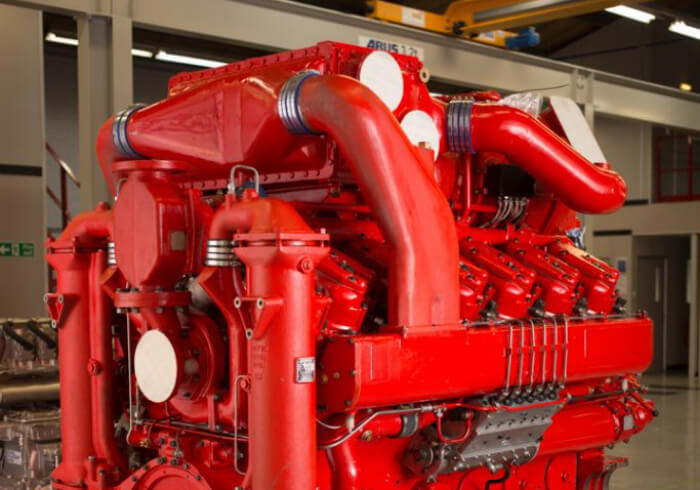

See the difference?
The basic engine is the same, but all of the developments over the years have resulted in components that drastically reduce the weight of the engine whilst keeping the output very similar, but with better efficiency and emissions.
The point I’m making here is not that you need to buy a new engine. Far from it. What I’m saying is that it absolutely makes sense to utilise new technology to improve the performance & reliability of your existing engine.
Here are just a few of the things worth considering for your engine:
- New gauge panels – be able pre-empt problems and check performance with all relevant information
- Upgrade pre-heat systems – eliminate start problems
- Redesign failed components – introducing new standards and materials not available or discovered when the engine was designed 50 years ago
- Upgrade of turbocharger system – improve performance and efficiency
- Retrofit governor system – easier load balancing and engine control
- New fuel pipes – meet latest SOLAS and NFPA 20 safety requirements for high pressure fuel pipes
With engines, it’s not always a case of “if it ain’t broke, don’t fix it”. Sometimes, you can vastly improve your engine, reducing costly breakdowns and improving safety even if it’s still performing, simply by making the most of the latest technology.